Friday, January 18, 2013

Top 10 plant: La-Z-Boy's Dayton site wins Industry Week honor


DAYTON, Tenn. — The La-Z-Boy recliners assembled here are designed for leisure and relaxation. But inside America's biggest furniture factory, more than 1,300 associates and their coaches are hardly sitting still.
La-Z-Boy is assembling as many recliners, chairs, sofas and other pieces of furniture here these days as it did prior to the recession in 2007 -- and at less cost than five years ago.
"We can produce as much today with our 1,400 employees as we did when we had nearly 2,500 employees [in the early 1990s]," said David Robinson, manager of continuous improvement for La-Z-Boy.
Over the past decade and a half, La-Z-Boy estimates it has cut $50 million a year in expenses by revamping production processes, automating work, cutting product wastes, recycling materials and reducing energy use.
"Every year we're challenged to drive a few million dollars of waste and inefficiency out of this organization," Robinson said.
Such efforts helped Rhea County's biggest manufacturer to survive the Great Recession and emerge as the biggest of La-Z-Boy's six U.S. plants. The upgrades also earned the La-Z-Boy facility in Dayton the top manufacturing honor Thursday from Industry Week magazine, which recognized La-Z-Boy as one of the 10 best plants in North America for 2012.
La-Z-Boy is the first furniture plant to earn the top Industry Week award in the 23-history of the magazine award program.
La-Z-Boy had been a finalist for the IW award three times previously but never has won the top magazine honor.
"In an American furniture industry decimated by foreign competition, a determined drive for cost efficiency and continuous improvement has allowed La-Z-Boy to flourish, even during the Great Recession," Industry Week said in recognition of the Dayton plant.
La-Z-Boy operates with a just-in-time inventory and delivery system that ensures that most furniture items are sold in advance of production and then are assembled to meet custom demand. With thousands of options and colors across its diverse product line, La-Z-Boy offers up to 14 million different variations of products -- 11 million of which can be customized and built in Dayton, Robinson said.
The assembly work is done in 40-foot by 50-foot cells where teams of six to eight workers build the frames, stuff polyurethane into previously cut-and-sewn components and attach the upholstery on the furniture. Within each of 31 cells in the factory, workers immediately test the finished furniture before packing it into boxes for shipment around the world.
The entire process of assembling a batch of recliners or other furniture items takes about four hours from when the component parts are brought to each cell until they are all assembled and ready for shipment.
"This [cell production] allows us to take a much more diverse product mix and run it more efficiently," Robinson said.
Workers in each cell are paid a base hourly rate, but much of their compensation is based upon the output of each team. Some worker teams more than double their base pay through the volume and quality of their work.
"You can buy our basic recliner today for about the same as what you could in 1973," said Harold "Bimbo" McCawley, the general manager of La-Z-Boy in Dayton who started at the plant as an assembly worker more than three decades ago. "With all of the increases in the cost of raw materials, labor, energy and other expenses, how many other manufacturers can say that?"
La-Z-Boy employees usually work four 9-hour and one four-hour shifts each week. But because orders are strong right now, La-Z-Boy is working five days a week and some Saturdays this month, Robinson said.
About 40 percent of all La-Z-Boy products are made in Dayton. The 56-acre campus here includes a 360,000-square-foot plant that assembles recliners and motion furniture. Across a parking lot another, similar-sized factory assembles a variety of sofas and stationary furniture.
La-Z-Boy also operates a metal supply center than produces the metal parts used at all six of the company's factories and a wood supply facility that produces all of the hardwood parts for all residential La-Z-Boy furniture.
"We're one of the few furniture plants in America that have not just survived, but thrived in recent years," McCawley said. "We've made tremendous progress, but we've still got a lot of opportunity to improve our operations to make us truly world class and that's what we're going to do."
Other winners of this year's top Industry Week awards for 2012 are CHN Wichita Project Center in Kansas; Ethicon LLC in Puerto Rico; Harris Products Group in Mason, Ohio; Lockheed Martin Missiles and Fire Control in Troy, Ala.; and Warren Rupp Inc., in Mansfield, Ohio.

Crave giveaway: Laptop bag packed with CES 2013 swag

CNET staffers scoured this year's Consumer Electronics Show floor for gear they thought readers would like. Here's part one of our awesome-stuff-from-CES giveaway.


Last year, readers liked our CES swag giveaway so much that we're doing one again this year -- in a big way. CNET staffers collected so many great goodies at CES 2013 that we have enough freebies for two separate giveaways.
This week's winner will score, among other prizes, an itty-bitty 1GB NewKube Kube MP3 player; a Moshi VersaCover hard-shell case with foldable cover and stand for the iPad Mini; and a Twig bendable docking cable for the iPhone and iPod.
From Casio, there's a flash drive that can be worn as a bracelet, and another little flash drive from Pepcom. Then there's a much-abridged version of "Frankenstein" by Mary Shelley. It was automatically shortened using a language heuristics engine from Stremor, maker of the TLDR (too long; didn't read) content-condensing plug-in for Chrome.
Oh, and did we mention the "Always On" and "Apple Byte" stickers signed, respectively, by hosts Molly Wood and Brian Tong? It all comes in a sturdy SwissGear CheckPoint-friendly computer backpack from Wenger. Woot.
Altogether, this swag stash would run you about $220, but you have the chance to get the whole thing for free. How? Well, there are a couple of rules here and there, so please read carefully. And be sure to check back next Friday for part two of our awesome-stuff-from-CES giveaway.
  • Register as a CNET user. Go to the top of this page and hit the Join CNET link to start the registration process. If you're already registered, there's no need to register again.
  • Leave a comment below. You can leave whatever comment you want. If it's funny or insightful, it won't help you win, but we're trying to have fun here, so anything entertaining is appreciated.
  • Leave only one comment. You may enter for this specific giveaway only once. If you enter more than one comment, you will be automatically disqualified.
  • The winner will be chosen randomly. The winner will receive one (1) CES swag bag, with a retail value of about $220.
  • If you are chosen, you will be notified via e-mail. The winner must respond within three days of the end of the sweepstakes. If you do not respond within that period, another winner will be chosen.
  • Entries can be submitted until Monday, January 21, at 12 p.m. ET.
And here's the disclaimer that our legal department said we had to include (sorry for the caps, but rules are rules):
NO PURCHASE NECESSARY TO ENTER OR WIN. A PURCHASE WILL NOT INCREASE YOUR CHANCES OF WINNING. YOU HAVE NOT YET WON. MUST BE LEGAL RESIDENT OF ONE OF THE 50 UNITED STATES OR D.C., 18 YEARS OLD OR AGE OF MAJORITY, WHICHEVER IS OLDER IN YOUR STATE OF RESIDENCE AT DATE OF ENTRY INTO SWEEPSTAKES. VOID IN PUERTO RICO, ALL U.S. TERRITORIES AND POSSESSIONS AND WHERE PROHIBITED BY LAW. Sweepstakes ends at 12 p.m. ET on Monday, January 21, 2013. See official rules for details.

Instagram hits 90 million users with 40 million pictures a day


When Instagram changed its ToS last month, many misread the site's intentions and believed that the change would allow Instagram to sell your pictures for advertising, and keep all of the proceeds. The uproar was so loud that Instagram quickly changed the ToS once again to get rid of the offending passages. At the time, the New York Post reported that the number of Instagram subscribers had dropped over the Christmas holiday from 16.4 million to 12.5 million as a backlash from the ToS change.

But those numbers turned out to be way off. Instagram has announced that it has 90 million active users. An amazing 40 million pictures are added to the site daily. And the site receives "8,500" likes and 1,000 comments per second. Oops! There's another 8,500 "likes"...and another. Co-founder Kevin Systrom says that Instagram continues to show strong growth around the world.

"Instagram continues to see very strong growth around the world. With many of the product and internationalization improvements we’ve made, we’ve been excited to see these efforts resonate with users globally."-Kevin Systrom, co-founder, Instagram

BlackBerry Dev Alpha C with QWERTY coming after January 30th

By now, you might be familiar with the BlackBerry 10 Dev Alpha A and BlackBerry 10 Dev Alpha B devices that RIM has been handing out left and right to developers. RIM's hope, of course, was that the code jockeys would be inspired to keep the shelves at BlackBerry App World well stocked in time for the launch of the new OS.

But while the A & B variants of the BlackBerry 10 Dev Alpha device were for the BlackBerry Z10 all-touch model, well, developers need to be able to check how their apps will run on the BlackBerry X10. This is the handset that resembles the BlackBerry Bold with rounded corners and a world class physical QWERTY keyboard. According to RIM spokesperson Victoria Berry, the Canadian based manufacturer will start to distribute the BlackBerry 10 Dev Alpha C phone with a physical QWERTY keyboard, after the January 30th introduction of BlackBerry 10. The SDK will also be released after January 30th.

Is that the Dev Alpha C at left next to the Z10 and X10?
The resolution on the BlackBerry X10 is different than the screen on the all-touch Z10 which will require developers to make some changes to accommodate both models. While the BlackBerry Z10 is expected to offer an aspect ratio of 16:9, with a resolution of 768 x 1280, the BlackBerry X10 is expected to have an aspect ratio of 1:1 at 720×720.

RIM CEO Thorsten Heins, who would certainly be in the running for any type of executive of the year award if BlackBerry completes this comeback, has already said that it is not the number of apps in an app store that makes it useful. He already said that BlackBerry App World will contain 200 to 400 of the top apps in each country and region.

Video shows BlackBerry 10 camera app in action; filters included!

Not that long ago, it looked as though we would have some sort of filter war. Instagram added a new filter, and that led Twitter and Flickr to add filters to their sites. Now it would seem that BlackBerry is tossing its name into the filter battle. A pre-production version of the BlackBerry Z10 (it only had 1GB of RAM and did not carry the final software) revealed some interesting things about the camera app on the phone, which was captured on video.

The camera app for the BlackBerry Z10 lets you make some changes to your pictures. A range of filters allows you to change colors and make other artistic enhancements. You will also have the ability to crop, re-size and even cut the picture into a specific shape.

We are closing in on the January 30th introduction of BlackBerry 10 and it seems that every day brings something new.

LG Optimus G on the way to Europe and China after selling 1 million units


LG's flagship smartphone, the LG Optimus G, has sold 1 million units since its launch in September according to the Korean based manufacturer. In comparison, the Apple iPhone 5 sold 2 million units in its first weekend of availability in China and Samsung, since May, has sold to retail channels 41 million Samsung Galaxy S III phones. LG had such high hopes for the LG Optimus G that these numbers might be looked at as a disappointment.

Much of the LG Optimus G was designed directly from LG's various divisions. For example, the battery offers 800 charging cycles instead of the usual 500 and came from technology produced by LG Chem. LG Display is responsible for the True HD IPS+ screen which has the Stripe RGB matrix instead of a pentile display. And LG Innotek together with LG Display, developed the G2 Touch Hybrid Display which eliminates the gap between the glass and LCD panel resulting in a 30% thinner touchscreen with an image that appears to touch your finger without a glass barrier.

The LG Optimus G
The LG Optimus G
Sometime this quarter, the LG Optimus G will be launched in China and in Europe which should beef up sales. Next month at MWC, LG is expected to bump the Optimus G from flagship status with a new 5.5 inch Android model with a FHD display possibly named the LG Optimus GK. After that, the LG Optimus G Pro, a sequel to the LG Optimus G, is expected to launch this fall with a 5 inch display. Not much is known about the model except that LG will probably try to top the specs seen on 2013's early top-shelf models.

LG is looking to sell 45 million smartphones this year in a market crowded with many high-end models. Samsung alone will be bringing at least two models that are already heavily anticipated in the Samsung Galaxy S IV and the Samsung GALAXY Note III. The LG built Google Nexus 4 could help LG reach its goal, but production needs to be ramped up to meet heavy demand for the phone. The model remains sold out at the Google Play Store although it will soon return in limited quantities to T-Mobile. An estimate devised by the use of serial numbers concluded that only 375,000 units were sold, a number than an LG executive has dismissed as being too low.

Apple looking to hire someone to "evolve" Siri's personality

A job listing at Apple (which has already been pulled down) was found today that had the company trying to find someone to help "evolve" Siri's personality. Apple loves to make its users feel a personal connection to iOS devices, and Siri has become a big part of that, because the voice-powered virtual assistant goes a long way towards anthropomorphizing an iOS device, giving it a character.

In the job listing, Apple was looking for someone creative, who could “help the Siri team evolve Siri as a distinct, recognizable character,” and to “develop and write original dialog to support new Siri capabilities.” It went on to read:
We’re looking for a uniquely creative individual to help us evolve and enrich Siri, our virtual personal assistant. Siri’s known for ‘her’ wit, cultural knowledge, and zeal to explain things in engaging, funny, and practical ways. The ideal candidate is someone who combines a love for language, wordplay, and conversation with demonstrated experience in bringing creative content to life within an intense technical environment.

As we said, the job listing has already been pulled from the Apple website, but that doesn't necessarily mean the job no longer exists. Apple will continue to work on Siri, so we wouldn't be surprised to see the listing come back.

Google ranks Fortune's best company to work for, Apple not even in top 100


Fortune has just released its 2012 ranking of the best companies in the world to work for and for a fourth consecutive year Google took the top spot. The whole listing ranks 100 companies and curiously Google’s biggest rival in mobile does not even appear in the top 100.

As to why Google continues to be a place that makes employees happy, it is once again the company with the best benefits and business model that keeps employees motivated.

“The Internet juggernaut takes the Best Companies crown for the fourth time, and not just for the 100,000 hours of subsidized massages it doled out in 2012. New this year are three wellness centers and a seven-acre sports complex, which includes a roller hockey rink; courts for basketball, bocce, and shuffle ball; and horseshoe pits,” Fortune explains.

In this ranking you can see that there is no connection between the amount of cash and profits a company generates and its place. It’s all about employee happiness.

There a lot of companies from the mobile industry, with Qualcomm taking a notable 11th place and Intel at number 68. Interestingly, Microsoft falls behind all aforementioned standing at 75. Hit the source link below for the full ranking.

Sony Xperia Z hands-on


 Watch out Samsung! There's someone gunning to dethrone you in the Android smartphone space, and more importantly, it looks as though they're getting started ahead of everyone. That's right folks, it's none other than Sony who is shaking things up here at the Consumer Electronics Show in Vegas. Just as the leaks have shown in the last month or so, Sony's upcoming flagship is indeed for real! Simply known as the Sony Xperia Z, it’s the Japanese company’s dubbed flagship device – and boy does it have the impressive specs sheet to live up to that recognition! Certainly we’re drooling over its wicked hardware, which consists of many lovable elements that would crush most of the existing line high-end smartphones on the market right now, but interestingly enough, it merely matches some of the stuff we’ve seen already put forth by the HTC DROID DNA most recently. First and foremost, the Sony Xperia Z travels in a different path from some of the other Xperia branded devices we’ve seen in the last year. Even though it might retain some of the Xperia design DNA, it’s a little bit different this time – mainly because it’s sporting a glossy finish with its casing, as opposed to some sort of cleaner looking finish. Of course, it’s a big magnet for things such as fingerprints and smudges, but to tell you the truth, it’s soundly solid with its construction. At the same time, Sony has been able to keep its profile relatively thin. Overall, it’s undoubtedly a handful to hold, but when you combine its sharp industrial design with its sturdiness, which includes being waterproof and dustproof, it’s a safe bet to assume it’ll withstand a lot more punishment than some of its highly esteemed rivals. Turning on the Sony Xperia X, our eyes relish the vibrant screen it’s packing along. Specifically, it’s a 5-inch 1080p display that’s using the Mobile BRAVIA 2 engine, which simply comes to life with its high contrast, robust color reproduction, and sharp viewing angles. Right away, it’s really the centerpiece of the Sony Xperia Z, since it’s the first thing to really catch our eyes from afar. Under the hood, a 1.5GHz quad-core Snapdragon processor coupled with 2GB of RAM is running the show. Although it’s able to win us over with its mostly responsive performance, we’re still seeing some sluggishness perusing around the UI – though, it’s worth noting that this is a pre-production model we’re scoping out, so it could be other software bugs that can be the culprit behind it. Rounding things out, it’s impressively packing along a 13-megapixel auto-focus camera that features an Exmor RS sensor, LED flash, and 1080p video recording. Additionally, it’s carrying along 4G LTE connectivity, a microSD card slot, 2,330 mAh battery, and NFC. With this particular pre-production model, it’s running Sony’s specific custom UI, an updated version of Timescape of course, which definitely packs its own set of eye candy, but from our cursory exposure, it doesn’t seem to be drastically different in terms of comprehensive functionality. Oh yeah, did we mention that it’s Android 4.1 Jelly Bean, with an anticipated software update to 4.2 sometime after launch? In the greater scheme of things, Sony neglected to provide an exact price point and release date for this monster, but it’s currently slated for a Q1 release, which means it can potentially be out any time before March. Needless to say, time might be working against this one indeed launches later in March, but if it really wants to take the crown by force, they need to get this one out sooner than later – with a price point that’s no doubt on the aggressive side as well.

Watch out Samsung! There's someone gunning to dethrone you in the Android smartphone space, and more importantly, it looks as though they're getting started ahead of everyone. That's right folks, it's none other than Sony who is shaking things up here at the Consumer Electronics Show in Vegas. Just as the leaks have shown in the last month or so, Sony's upcoming flagship is indeed for real!

Simply known as the Sony Xperia Z, it’s the Japanese company’s dubbed flagship device – and boy does it have the impressive specs sheet to live up to that recognition! Certainly we’re drooling over its wicked hardware, which consists of many lovable elements that would crush most of the existing line high-end smartphones on the market right now, but interestingly enough, it merely matches some of the stuff we’ve seen already put forth by the HTC DROID DNA most recently.

First and foremost, the Sony Xperia Z travels in a different path from some of the other Xperia branded devices we’ve seen in the last year. Even though it might retain some of the Xperia design DNA, it’s a little bit different this time – mainly because it’s sporting a glossy finish with its casing, as opposed to some sort of cleaner looking finish. Of course, it’s a big magnet for things such as fingerprints and smudges, but to tell you the truth, it’s soundly solid with its construction. At the same time, Sony has been able to keep its profile relatively thin. Overall, it’s undoubtedly a handful to hold, but when you combine its sharp industrial design with its sturdiness, which includes being waterproof and dustproof, it’s a safe bet to assume it’ll withstand a lot more punishment than some of its highly esteemed rivals.

Turning on the Sony Xperia X, our eyes relish the vibrant screen it’s packing along. Specifically, it’s a 5-inch 1080p display that’s using the Mobile BRAVIA 2 engine, which simply comes to life with its high contrast, robust color reproduction, and sharp viewing angles. Right away, it’s really the centerpiece of the Sony Xperia Z, since it’s the first thing to really catch our eyes from afar.

Under the hood, a 1.5GHz quad-core Snapdragon processor coupled with 2GB of RAM is running the show. Although it’s able to win us over with its mostly responsive performance, we’re still seeing some sluggishness perusing around the UI – though, it’s worth noting that this is a pre-production model we’re scoping out, so it could be other software bugs that can be the culprit behind it. Rounding things out, it’s impressively packing along a 13-megapixel auto-focus camera that features an Exmor RS sensor, LED flash, and 1080p video recording. Additionally, it’s carrying along 4G LTE connectivity, a microSD card slot, 2,330 mAh battery, and NFC.

With this particular pre-production model, it’s running Sony’s specific custom UI, an updated version of Timescape of course, which definitely packs its own set of eye candy, but from our cursory exposure, it doesn’t seem to be drastically different in terms of comprehensive functionality. Oh yeah, did we mention that it’s Android 4.1 Jelly Bean, with an anticipated software update to 4.2 sometime after launch?

In the greater scheme of things, Sony neglected to provide an exact price point and release date for this monster, but it’s currently slated for a Q1 release, which means it can potentially be out any time before March. Needless to say, time might be working against this one indeed launches later in March, but if it really wants to take the crown by force, they need to get this one out sooner than later – with a price point that’s no doubt on the aggressive side as well.

The 10 Best Gadgets of CES

The Consumer Electronics Show has a long history as the biggest trade show in the industry, but it’s role has certainly shifted over the years. After Microsoft announced that 2012 was going to be their last year at CES, we were left wondering what CES would look like here on out. The result was something more exciting and surprising than the presence of Microsoft or Apple could have brought.
Yes there were a healthy share of ultra-HD 4K TVs and Windows 8 tablets—but the real excitement of CES this year was found on the independent hardware side of things. The expo was home to some revolutionary products that are truly pushing forward the future of consumer electronics. So here they are—the 10 best gadgets from CES 2013:
CES-2013NewImage2.png

(image courtesy of TG Daily)
10. Panasonic 4K 20” Tablet
Panasonic must have known that 4K was going to the buzzword of CES this year because this ultra-HD 20” Windows 8 tablet knocked the socks off most of the other companies’ 4K offerings. Sure, we know what you’re thinking: What in the world are you going to do with a 20” tablet? Panasonic recommends the device for architects and designers, but honestly we are not totally sure. But when your tablet has four times the resolution of 1080p, does it really matter?
Tobii-Rex-close-up.jpeg

(image courtesy of LaptopMag)
9. Tobii Rex Windows 8
Eye-tracking technology has been around for quite some time, but the Tobii Rex sensor does it in a way that actually seems practical. As a simple Windows 8 tech demo, being able to move up and down an Internet Explorer tab or or open an application with no more than a look and the press of a key is pretty incredible. Tobii’s plan to get these onto ultrabooks and tablets at a relatively low cost is what is truly exciting though.
Razer-Edge-Gaming-tablet.jpeg
8. Edge Razer Gaming Tablet
Considering the company’s dominating control of living room entertainment gaming, the idea that Microsoft would bring serious gaming to their line of Surface tablets always seemed like a no-brainer. Fortunately, their lack of motivation on the gaming front won’t keep independent hardware developers from realizing the true potential of Windows 8 though. The Edge Razer Gaming Tablet is determined to make a single 10.1" Windows 8 tablet your definitive gaming experience, regardless of whether you’re on the go, lounging on the couch, or sitting at a desk. With it’s detachable accessories and docking stations, the Edge Razer is an all-in-one computer.
xi3.jpeg
7. Xi3/ Valve Piston Steam Box
The Steam Box is a real thing and it is coming, as we reported on earlier. However, it seems as if Valve’s open-source solution to the living room just might come in the form of multiple Steam Boxes. Xi3’s Piston is the first of these we’ve seen thus far—a little powerhouse with it’s 1TB of SSD internal storage and Quad-Core AMD processor being squeezed into a cube not much bigger than your fist. Built from the ground up as a modular computer with Steam’s Big Picture mode in mind, the Valve-funded Piston PC is definitely exciting — but it’s only the beginning.
sony-xperia-z-1.jpeg
6. Sony Xperia Z
With the Xperia Z, Sony has reintroduced itself as a serious contender in the Android OEM market. In a show otherwise absent of smartphone announcements, Sony’s new flagship device really stands out as the next great Android phone. Running stock Android Jelly Bean, utilizing a beautiful 1080p display and boasting a surprisingly sleek industrial body, the fact that Xperia Z is waterproof is only icing on the cake.
UN85S9-samsung-85inch-uhdtv-1.jpeg
5. Samsung’s 4K “Easel” TV
When Samsung talked about revealing a TV with an “unprecedented shape” and “timeless design”, a TV hung on an easel isn’t exactly what we had in mind. Even still, the design of this 85” 4K TV is truly awe-inspiring. We can’t imagine putting this thing in our living rooms, but the “floating” design and incredible pixel density is a breathe of fresh air in the tired world of generic TV design.
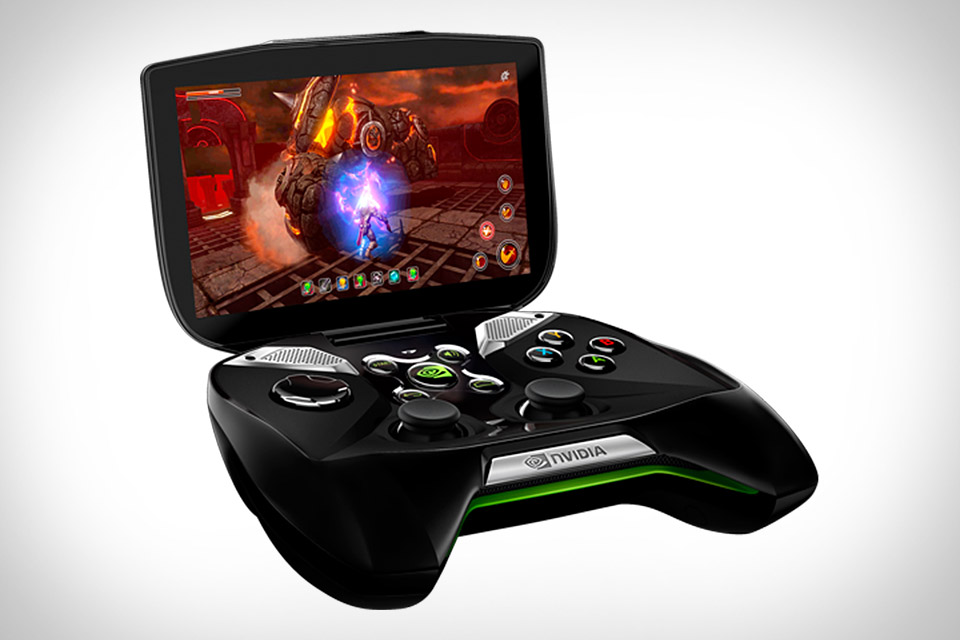
nvidia-project-shield-xl.jpeg
4. Project Shield
Gaming was a surprisingly big theme this year at CES and no more shocking an announcement was there than NVIDIA’s Project Shield. Powered by their new Tegra 4 mobile processing chip, Project Shield is a peculiar, though exciting portable gaming device—especially coming from NVIDIA. It’s essentially an Xbox controller with a clamshell 5” 720p screen attached to it. The device runs stock Android Jelly Bean, but the most exciting thing about it is the ability to stream games from your computer over WiFi. In other words, if having access to Steam on a portable device sounds good to you, keep an eye out for Project Shield.
lenovo-thinkpad-helix.jpeg
3. Lenovo ThinkPad Helix
Finally, a Windows 8 transforming tablet/laptop hybrid that gets it right. This is a serious ultrabook with a Core i7 processor and up to a 256GB SSD that just happens to work eloquently as a detachable tablet as well. As the followup to last year’s ThinkPad Yoga model, the Helix finally delivers on Windows 8’s promise as a “no-compromise” computer. The 11” 1080p display is no slacker and neither is the 256GB SSD—but the real magic is how the Helix transforms from powerhouse ultrabook to portable tablet. If the Helix doesn’t push Microsoft to step up their design game on the Surface, we don’t know what will.
pebbles.jpg
2. Pebble
There has been a lot of negative, slanted talk toward Kickstarter lately. Hop on just about any message board or comments section and hear all about startup companies lack of serious investment and accountability to consumers. That’s why the Pebble smartwatch is such a victory for not only indie hardware developers, but also for the entire crowd-sourcing investment model. Pebble is the highest-funded Kickstarter project ever and it’s hands-on unveiling at CES did not disappoint. The slick E-ink display and Bluetooth-powered apps that interface with your iOS or Android smartphone make the Pebble smartwatch the next big thing in wearable devices. In fact, we wouldn’t be surprised to consumer electronic giants try to catch up with a line of smartwatches next year at CES.
50e663d8dcfb9ad5d2bb2577b973cfb3_large (2).jpeg
1. Oculus Rift
Virtual reality is the flying car of our generation. We’ve been promised it for decades through literature, film, and even technology—but until now, it’s just never come to fruition. Enough is enough, though, because the Oculus Rift is what anyone who’s ever wanted a Holodeck of their own has been waiting for. Created for public consumption by a previously unknown hardware startup and funded by Kickstarter, the virtual reality experience delivered by the Oculus’ head-mounted display is at a mind-boggling, other-universe level of immersion. We’ve seen the future—and gaming will never be the same.

Samsung’s Flexible Displays, Brand Matters’ Experts and Best of CES Awards Highlight Day Two And Three of 2013 CES

President Clinton addresses how mobile devices can bridge the global divide; FCC Announces Initiative to Improve Wi-Fi Congestion

Las Vegas, NV – 01/10/2013 –


The past two days of the 2013 International CES® featured keynotes from Samsung and the Brand Matters Keynote, plus SuperSessions focused on the future of technology innovation and award winner announcements. Every major tech company, including top social media organizations like Amazon, Google, Groupon Goods, Facebook, Foursquare, Twitter, Tumblr and YouTube are at the 2013 CES – conducting meetings, speaking, exhibiting, or holding private meetings. Owned and produced by the Consumer Electronics Association (CEA)®, the 2013 International CES, the world’s largest annual innovation event, runs through Friday, January 11 in Las Vegas, Nevada.
 
Dr. Stephen Woo, president, device solutions business, Samsung Electronics, focused his Wednesday morning keynote address on the components that make mobile computing possible and how Samsung is developing innovative component solutions in three areas: processing, memory and display. “As users become more attached to their devices, they become more sophisticated in their desires,” he said. Woo unveiled Samsung’s eight-core Exynos 5 Octa mobile processor, which uses ARM's big.LITTLE architecture to deliver faster processing speeds while consuming less energy.  He also demonstrated Samsung’s latest flexible OLED mobile displays.
Woo brought on stage with him leaders from several partner companies and organizations, including President Bill Clinton who serves as the ambassador to the Samsung Hope for Children, which supports children’s education and access to health care globally. “The world has huge challenges which I think technology can help to overcome,” Clinton said, adding that he believes mobile devices can be used to “bridge the divides of the world.”
The Brand Matters Keynote focused on the social media aspects of marketing. Moderated by Michael Kassan, chairman and CEO of MediaLink, the keynote began with a one-on-one with Marc Benioff, Chairman and CEO of salesforce.com. Benioff discussed the explosion of consumption and sharing of content thanks to the proliferation of wireless. “The mobile revolution has taken over everything,” said Benioff. “When you walk the show floor like I did yesterday, you see in real-time that everything is connected.” The keynote then broke into a panel discussion with executives from AT&T, American Express, Coca Cola and Unilever to explore the magic of unlocking a brand.
 
The Brand Matters SuperSession focused on how consumers are really engaging with digital media. It is easier than ever for brands to communicate to the consumer, but it is increasingly more difficult to have engagement from the consumer. Gen Y tends to care more about their own personal brand than a company’s brand, so to engage with the individual, the brand must promote the individual’s brand. Six Gen Y consumers discussed their use for social media and their outlooks on issues such as privacy, company response on complaints and advertising on social platforms.
 
Representatives from Tumblr, Facebook, Twitter, Foursquare, YouTube and Amazon discussed how they thought brands could engage with consumers on their platforms. The shift from desktops to mobile has forced the platforms to adapt to their consumers’ needs and expectations. The representatives from the multiple platforms agreed that to have successful brand engagement, the brand must have a strong and consistent voice and personality. They must also utilize multiple platforms and individualize their engagement to the individual as much as possible.
 
During Wednesday's SuperSession One-on-One with Federal Communications Communications Commission (FCC) Chairman Julius Genachowski and Gary Shapiro, president and CEO, CEA, Genachowski announced that the FCC will kick off a government-wide effort to increase Wi-Fi speeds and alleviate Wi-Fi congestion at major hubs, such as airports, convention centers and larger conference gatherings, like the Las Vegas Convention and World Trade Center (LVCC). He predicted that their efforts to free-up spectrum in the 5 gigahertz band would increase Wi-Fi capabilities by 35 percent from current levels. Prior to the announcement, Shapiro dubbed Genachowski “the spectrum chairman” and thanked him on behalf of the industry for all that he had done to unleash valuable spectrum resources.
 
The Mega Trends and Mobile First World SuperSession featured an interactive panel discussion with moderator Rajeev Chand, managing director and head of research, Rutberg & Compant. Chand was joined on stage by panelists: Anand Chandrasekher, Qualcomm; Glenn Lurie, AT&T; Kevin Packingham, Samsung; and Vaughan Smith, Facebook. Discussion centered around the most important trends in the mobile first world. Panelists discussed the mobile ecosystem, future of wireless devices and the concept of “the Internet of things.” Processor capabilities, connected cars, smart homes and the smart TV relationship were among the top mobile trends for 2013 named. Panelists named healthcare, education and travel industries as industries ripe for change.
 
The Verge's Joshua Topolsky and Nilay Patel led the Argue the Future 2: Return of the Future SuperSession with panelists Eric Chen of Lytro, Andy Forssell of Hulu and Walt Mossberg, The Wall Street Journal. The session focused on the future of content distribution and video displays and how much resolution consumers will give up for greater flexibility in video accessibility.
 
Jay Esguerra, Kevin Castle, Chris Woolum and Aurelio Agundez took home the $4,000 grand prize from the CEA MoDev Hackathon, sponsored by the Travel Channel, for their creation of the app “Travel Social,” which allows users to select a destination and have social networks tell them all about where they're going and what's popular. Twenty-six teams of up to four people competed in the Hackathon, where teams worked for eight hours developing apps that incorporated aspects of travel or adventure. Second place winners Dani Sparks and Scott Motte received $2,500 cash and Beats by Dre headphones for “Posted,” which provides actual custom postcards from wherever you travel.
 
Tim Westergren, chief strategy officer and founder of Pandora, delivered the keynote address at the 2013 CES Leaders in Technology (LIT) Dinner Wednesday evening, an annual event that features a distinguished audience of government guests, top policymakers and technologists. In his remarks, Westergren detailed the challenges he encountered while building Pandora into the success that it is today, and addressed the need to fix the broken royalty payment system. Westergren reported that 100,000 artists are represented on Pandora via millions of songs across all genres and that technology allows the company to deliver customizable radio to its customers and to mobilize them, when necessary, to action.
 
Winners of CNET’s Best of CES Awards were announced on Thursday, with Best of Show honors going to the Razer Edge. Other category winners can be found at ces.cnet.com.
 
Today's Developer University brought together app developers to meet platform developers, see live demos and network. The Last Gadget Standing competition resulted in the Lenovo IdeaCentre Horizon Table PC winning the top online award. In an onsite run-off, the Luminae keyboard edged out the Misfit Shine as the top product in the event. The Mobile App Showdown featured 10 companies and their innovative apps. MyScript Calculator won the showdown and allows users to write down a mathematical equation and then solves it on the spot. The app recognizes all types of math equations and its range of difficulty was demonstrated on the Mobile App Showdown stage.
 
Winners of the Technology & Engineering Emmy Awards will be announced tonight.

Note to Editors:  The official name of the global technology event is “International CES.”  Subsequent references to the show can be shortened to “CES.”  Please do not use “Consumer Electronics Show” to refer to the International CES.
About CEA